


We need more than lighthouses
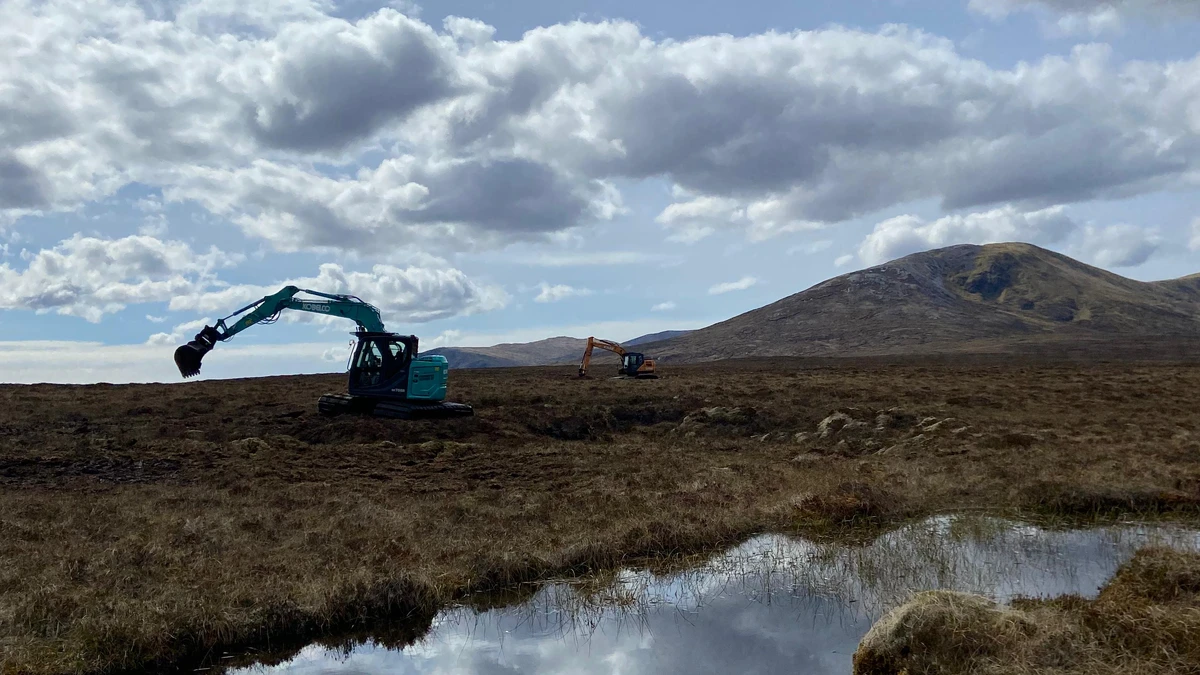
Scotland’s natural capital sector has no shortage of lighthouse projects. But lighthouses work only if someone is looking at them.
Scotland has many high-profile, well-funded, carefully curated programmes that signal to the world where peatland restoration is heading. They are important. They attract attention, build confidence and demonstrate what is possible when public and private investment align.
However, the natural capital sector in Scotland and the UK more broadly cannot be built on a handful of flagship initiatives alone; they don’t do enough to build confidence. If this is going to become a thriving, long-term economic sector rather than an interesting footnote in Scotland’s net zero story, we need something far more fundamental. We need consistent, systematic demand for what these projects deliver: verified carbon emission reductions, measurable improvements in water quality and natural flood management, biodiversity uplift and genuine socioeconomic benefit for rural communities.
Policy can help drive and sustain that demand and there are encouraging signals. But there needs to be a mindset shift alongside policy change. Corporates, investors and public bodies need to move beyond viewing peatland restoration as a fringe exercise or a one-off offset purchase.
The outputs from high-integrity projects need to be seen as essential and valuable business needs, not optional extras. This is where my lighthouse analogy starts to stretch.
A lighthouse alerts people to something, it signals where things are. But, if there is no underlying network of radar, navigation charts, trained crews and functioning harbours, the lighthouse is just a pretty light on a rock that will eventually become an expensive Airbnb. The same applies here. Without a broad base of understanding across buyers, landowners, policymakers and the financial sector about how natural capital markets (and specifically those involving peatlands) work, what quality looks like and why long-term commitment matters, even the best projects may struggle to find sustained support.
At CCP, we manage more than 80 active Peatland Code projects across Scotland. We experience first-hand what happens when demand is inconsistent or poorly understood. Conversely, when buyers commit meaningfully and early, everything accelerates and starts to make sense.
Scotland can lead the UK in building a natural capital economy. But it requires more than a few well-lit examples on the horizon. It requires depth, breadth and consistency across the entire sector, driven forwards by committed pioneers
Text originally published in Scottish Land & Estates Land Business magazine, Spring 2026.
For more information on this article, please contact:
Freddie Ingleby
Managing Director
+44 (0) 7840 998 944
freddie@caledonianclimate.com
About Caledonian Climate
Working responsibly with the custodians of Scotland’s beautiful countryside, Caledonian Climate is committed to tackling the twin crises of climate change and biodiversity loss.
To achieve this, we talk to forward-thinking businesses who want to fulfil their ambitions for carbon emission reductions through high-quality carbon credits with multiple co-benefits. We then partner them with landholders in the Scottish Highlands, maximising the ecological value and sustainability of their estates.
Building on our significant experience, and guided by a distinguished Advisory Board, Caledonian Climate is delivering the benchmark for long-term restoration of Scotland's degraded peatlands, locking away the carbon for good.
Our work also enhances biodiversity, improves water quality, boosts local economies and creates a compelling story for all of our partners to share.
