5 ways peatland restoration impacts water
Peatlands are among the most valuable ecosystems in the UK, offering significant benefits to the climate, nature and communities.
But beyond their better-known benefits of reducing carbon emissions and enhancing biodiversity, healthy peatlands also play a critical role in restoring our natural hydrological systems. The positive impacts of healthy peatlands on water are wide-reaching, including:
- Improving the quality of drinking water
- Mitigating the risk of flooding
- Limiting the impacts of drought
- Reducing water scarcity
Today, we’re spotlighting the many ways peatland restoration positively impacts hydrology, and why UK businesses committed to water resilience should pay attention to this invaluable natural asset.
Improved water quality
Healthy peatlands are natural filtration systems. The water-logged, heavily vegetated conditions of undamaged peatlands naturally trap sediment and contaminants, reducing the risk of pollutants entering our water courses and resulting in minimal intervention on reaching water treatment facilities.
However, when degraded, exposed peat oxidises and erodes, releasing dissolved organic carbon, sediment, and nutrients into surrounding watercourses. This produces high organic loading, discoloured drinking water, and ultimately more complex, more expensive water treatment works. In Scotland alone, it is estimated that over 600,000ha of peatland are in a poor condition, contributing to reduced water quality across the country.
Peatland restoration reverses these effects by stabilising the blanket bog and restoring vegetation cover, which subsequently slows the breakdown of peat and erosion. This is currently playing out in Loch Katrine, where a 400ha peatland restoration project is underway to enhance the quality of drinking water for 1.3 million residents in Glasgow and the central belt of Scotland. Catalysed by an increase in contaminants flowing into the Loch due to extreme rainfall, this work is an example of how investing in restoring degraded peatlands has a direct impact on the health and wellbeing of the general public.
Flood mitigation
The UK has already seen significant flooding in the first three months of this year, with the Met Office describing rainfall as a ‘defining feature’ of January 2026. According to research from Aviva, 1 in 9 new homes are at risk of flooding, with severe financial and social implications.
Recovering degraded peatlands is one way to mitigate against such extreme flooding. Healthy peatlands have a naturally high-water storage capacity; their spongy, waterlogged structure can absorb and hold vast amounts of water, reducing the speed at which it moves through catchments in high rainfall. This process serves to flatten flood peaks and delay runoff during heavy rainfall events, reducing the impact of flooding.
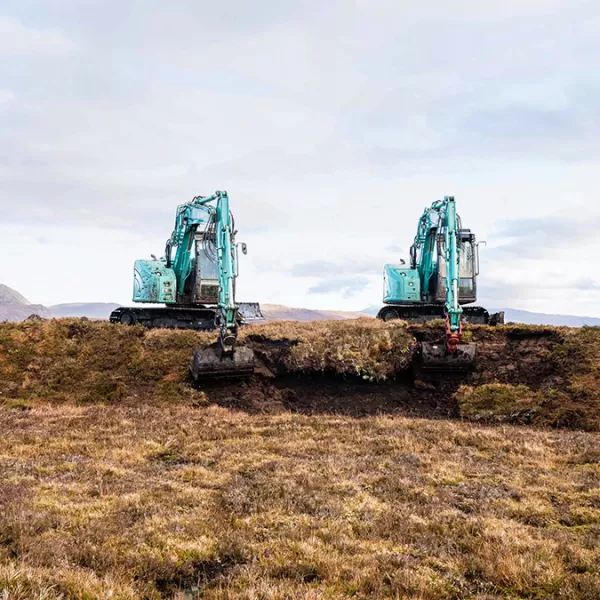
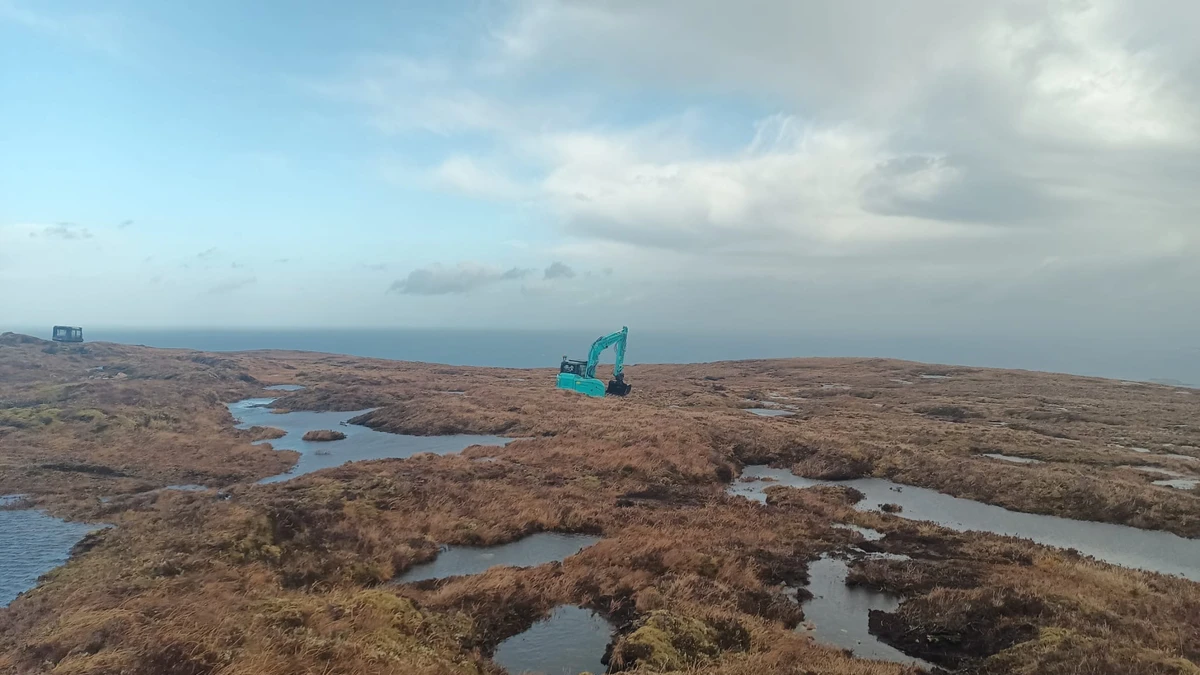
These natural features are lost in degraded peatland. Instead, dried-out peat fails to absorb and hold water, causing rainfall to flow away quickly, which ultimately increases peak river flows and downstream flood risks. Restoring degraded peatlands by blocking drainage ditches and re-establishing saturated peat soils recovers the land’s natural ability to retain and slowly release water, supporting the UK’s flood management strategy.
Drought prevention
Peatlands not only regulate water during periods of excess, but they also help to sustain water availability during dry conditions. As drought becomes more frequent in the UK due to climate change - last year was the driest spring since 1956 - peatlands hold a powerful solution to addressing the risks of extreme dry weather.
Healthy peatlands absorb and store large volumes of water within their structure. During prolonged dry periods, this stored water is gradually released into surrounding soils, streams, and groundwater systems, providing a consistent water source to prevent drought
In contrast, degraded peat often loses the capacity to absorb, retain and release water. Peatland restoration projects reverse this damage and, in doing so, enhance the UK’s resilience to drought, supporting ecosystems and water supplies during increasingly variable climate conditions.
Tackling water scarcity
This ability to regulate water supply across seasons positions peatland restoration as a critical tool in addressing global water scarcity – an escalating challenge driven by intensifying rainfall variability linked to climate change.
According to the United Nations, over 2.2 billion people still lack access to safely managed drinking water. In the UK, the Environment Agency suggests daily water shortfalls could reach five billion litres by 2055 without action.
With approximately 70% of the UK’s drinking water sourced from upland peat-dominated catchments, recovering these damaged ecosystems must be central to any national strategy for water security.
Healthy peatlands contribute to more stable base flows in water bodies, providing a more reliable supply for the nearly 28 million people in Britain who depend on drinking water filtered through peatlands.
Business commitment
For businesses looking to demonstrate their commitment to the UK's water systems, peatlands hold a valuable opportunity.
Alongside legislative developments, such as the Water (Special Measures) Act 2025, environmental expectations for businesses are evolving to include water commitments. Investors, regulators and customers increasingly expect businesses to report transparently on environmental impacts - and water is quickly becoming a key performance indicator.
The long-term benefits of restoring damaged peatlands, from improved water quality to flood and drought mitigation, offer businesses the chance to make a meaningful impact on emerging water challenges and demonstrate their commitment to UK net-zero and nature goals.
Strengthening our water infrastructure
Caledonian Climate delivers large-scale peatland restoration projects to recover these critical ecosystem functions, contributing to greater water resilience, reduced flood and drought risk, and stronger, healthier landscapes for generations to come.
Interested in bringing your company’s nature and water commitments to life? Get in touch with Caledonian Climate here to see how we can help.
For more information on this article, please contact:
Freddie Ingleby
Managing Director
+44 (0) 7840 998 944
freddie@caledonianclimate.com
About Caledonian Climate
Working responsibly with the custodians of Scotland’s beautiful countryside, Caledonian Climate is committed to tackling the twin crises of climate change and biodiversity loss.
To achieve this, we talk to forward-thinking businesses who want to fulfil their ambitions for carbon emission reductions through high-quality carbon credits with multiple co-benefits. We then partner them with landholders in the Scottish Highlands, maximising the ecological value and sustainability of their estates.
Building on our significant experience, and guided by a distinguished Advisory Board, Caledonian Climate is delivering the benchmark for long-term restoration of Scotland's degraded peatlands, locking away the carbon for good.
Our work also enhances biodiversity, improves water quality, boosts local economies and creates a compelling story for all of our partners to share.